 Lucky Step
GAME NIGHT
7 Fun Alternatives to Rolling Dice for Board Games
Seven practical dice alternatives for family game night: paper slips, cards, spinners, tokens, coins, an offline app, and a shuffled movement deck.

The board is ready, the pieces are in place, and you want a different way to decide the next move. Maybe a die is missing, or perhaps making the randomizer is part of tonight's activity. These seven alternatives to rolling dice use ordinary materials as well as a digital option.
Before changing a published game's rules, check what its dice actually do. A single 1–6 result, a pair of dice, and a symbol die are different tools. Agree on the replacement together, especially when doubles or special faces trigger extra actions.
1. Numbered slips in a cup
Try it for: a quick replacement for one six-sided die. Write 1–6 on matching slips, fold them alike, and draw from a cup without looking. Return the slip and mix before the next turn if repeated results should remain possible.
For a homemade race, children can decorate the cup while an adult checks that all six numbers are present once. Different paper sizes or distinctive folds can give away a result, so keep the slips as similar as you can.
2. Six numbered cards
Try it for: a table where flipping a card is easier than handling a small die. Make six cards marked 1–6. Shuffle, reveal one, then return it and reshuffle before the next draw.
Larger cards can make the result easier to see across the table. This also gives players something physical to reveal. If you leave cards out, tell everyone: the next draw now comes from a smaller pool rather than a fresh six-way choice.
3. A homemade spinner
Try it for: a game designed on a big sheet of paper. Draw six equal sectors and add a pointer that can move freely. Give a boundary result a clear rule, such as spinning again.
You can use symbols instead of numbers for a game with matching actions. Check that the pointer moves without catching. A craft spinner can have physical biases, so treat it as a casual game component rather than a precision randomizer.
4. Matching numbered tokens in a bag
Try it for: a tactile draw with a dramatic pause. Mark matching counters with the allowed numbers, place them in an opaque bag, mix, and draw one. Return it after the turn for repeatable results.
Use tokens of the same size, shape, and texture so players cannot identify numbers by touch. Choose age-appropriate pieces and keep small objects away from children who may put them in their mouths.
5. Three coin flips, with a reroll rule
Try it for: a small probability experiment that also produces movement. Flip a fair coin three times and record the sequence in order. Map HHH, HHT, HTH, HTT, THH, and THT to 1–6. If you get TTH or TTT, discard the sequence and start again.
Assuming independent fair flips, the eight sequences are equally likely. Rejecting two leaves six equally likely accepted outcomes. Simply counting heads would produce 0–3 with unequal probabilities, so it would not replace a six-sided die.
6. An offline random number app
Try it for: custom movement ranges or a result everyone can see on a tablet. Set a range, place the device beside the board, and let the current player trigger the draw. Agree to use the first completed result.
Lucky Step is the free app I made for this situation. It supports iPhone and iPad, works offline for number generation, and offers rolling numbers, a wheel, and card reveals. Values stay within 1–100, and the wheel supports up to 20 numbers. It does not manage your board game's rules.
What can you do with Lucky Step?
- Choose your number range: use quick ranges of 1–6, 1–10, 1–20, or 1–100, or set custom start and end values within 1–100 to match your movement rules.
- Pick a reveal animation: choose rolling numbers, a lucky wheel, or a card flip, with a reveal duration of 1–15 seconds. The wheel supports ranges containing up to 20 numbers.
- Use multiple languages and spoken results: the app supports 10 languages, including English, Chinese, Japanese, Korean, and French. Follow your device language or choose one manually. With sound enabled, the result is spoken aloud after the animation.
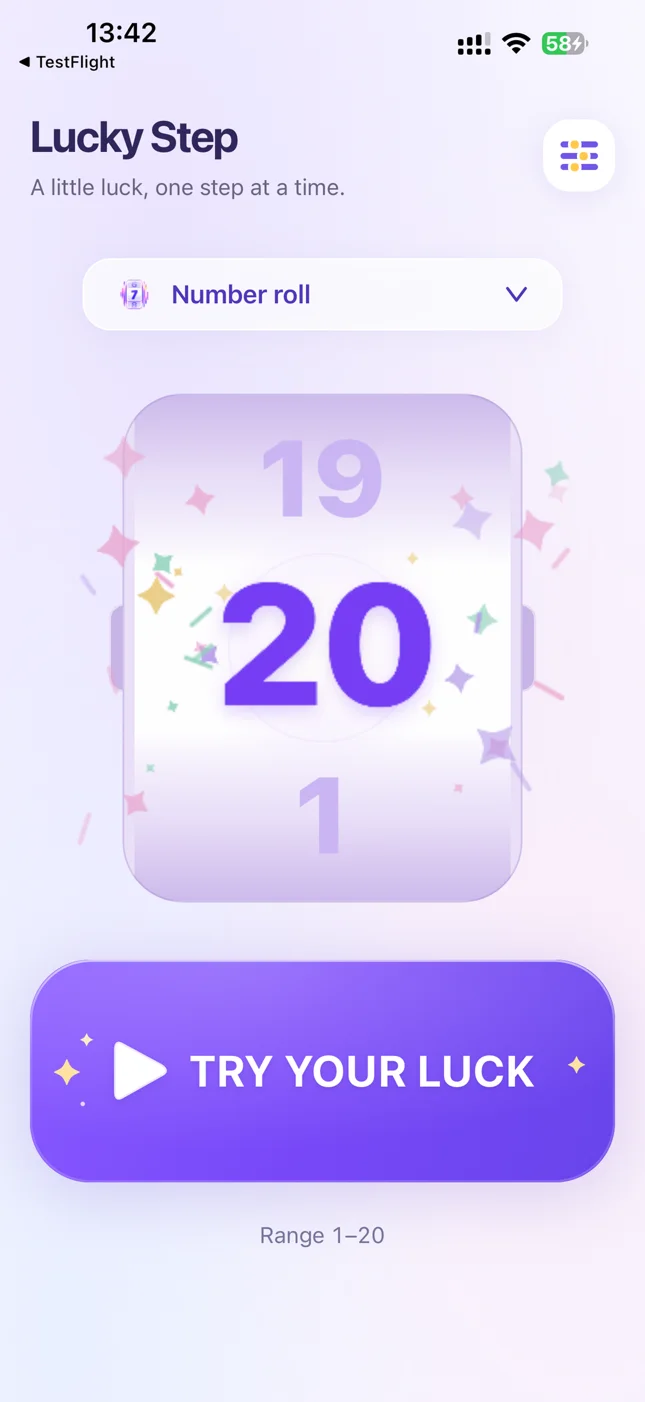 Rolling numbers
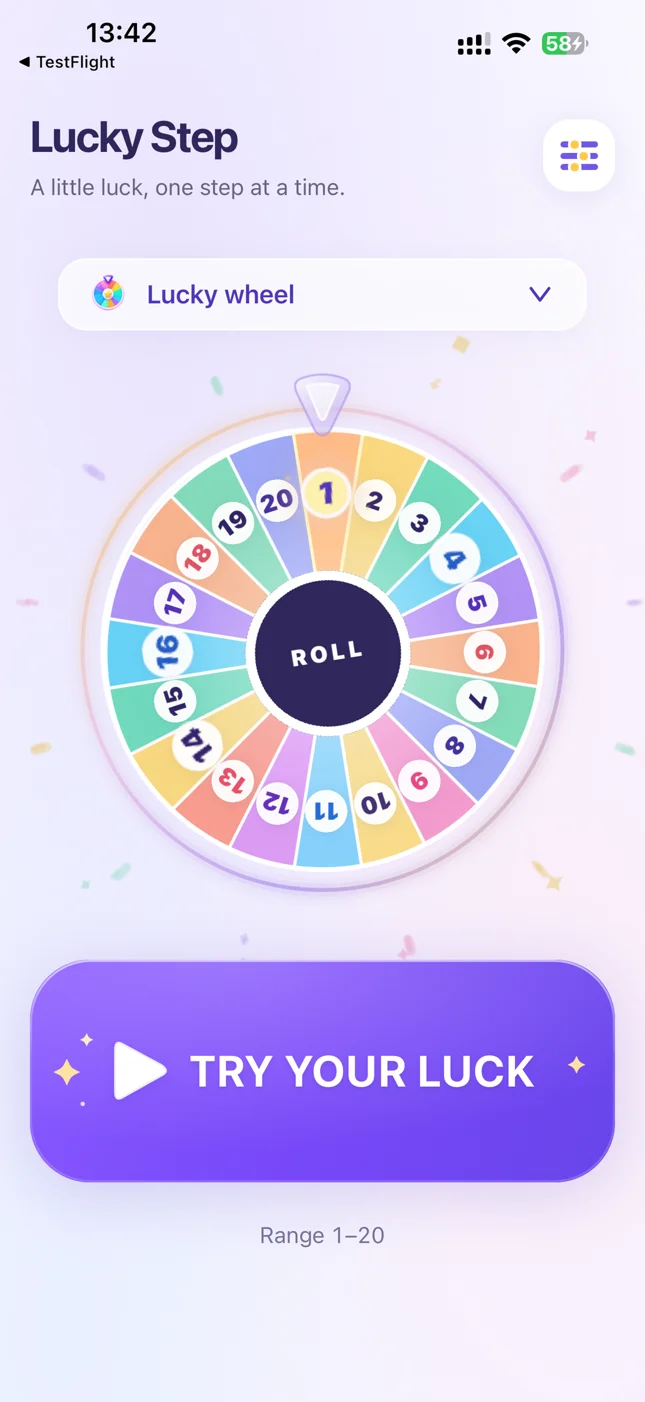 Lucky wheel
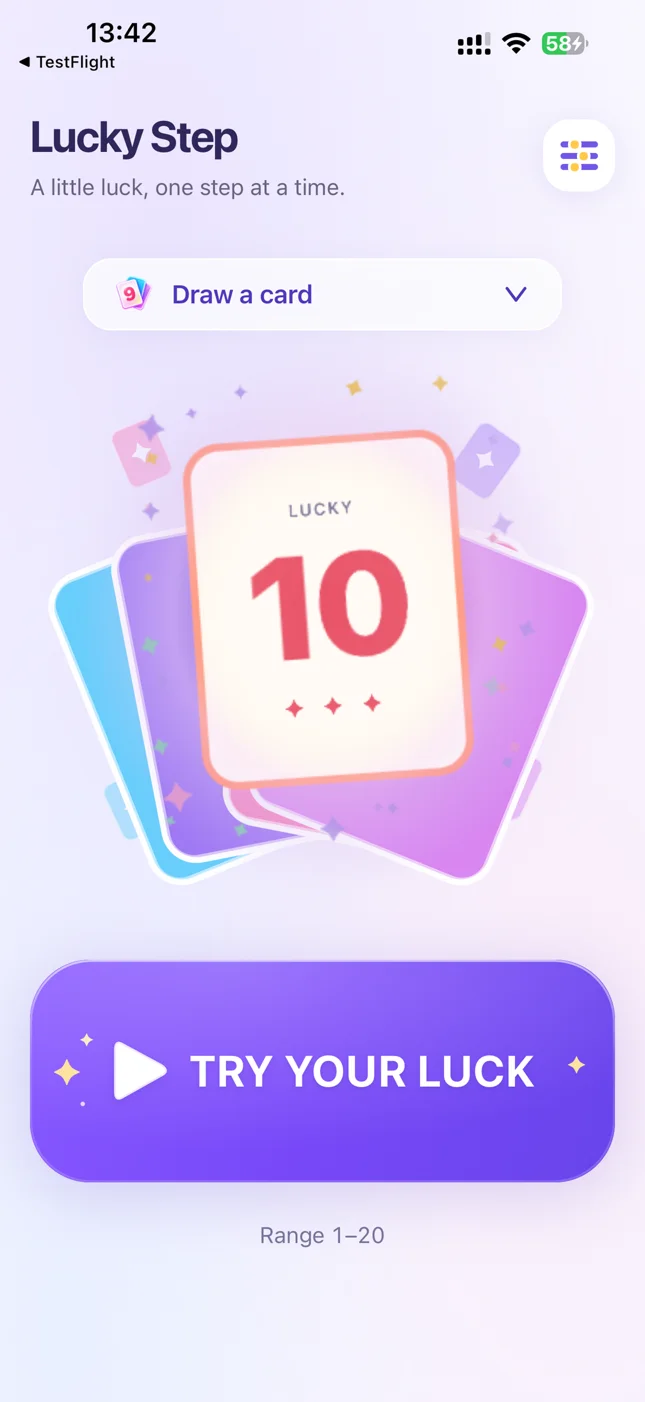 Card reveal
7. A shuffled movement deck for a house-rule game
Try it for: a homemade game where you want a known mix of moves. Make twelve cards with two copies each of 1–6. Shuffle once, draw without replacement, and rebuild the deck when it is empty.
This differs deliberately from the reshuffled cards in option 2. Over the complete deck, every movement value appears twice. Players can reason about what remains, so the deck introduces memory and changing odds. It may suit a custom game, but it will change a game designed around independent die rolls.
Match the replacement to the game
For a close replacement for one die, keep all six outcomes available every turn. For an experimental house rule, try a deck that gradually empties. For two dice, preserve two separate results and their sum; a single integer from 2–12 does not have the same odds.
Pick the option your group can understand and use consistently. If you want help setting ranges, the board game random number guide walks through a few examples.