 Lucky Step
PLAY GUIDE
Random Number Generator for Board Games – Free & Fun Ways to Play
From the 1–6 limit of a standard die to slow spinners and unclear pointers, see how Lucky Step gives board games adjustable ranges and clear results.

For a movement-based board game, rolling a die is the familiar choice: read the number and move your piece that many spaces. It is simple and quick. But one ordinary six-sided die only gives you 1–6. What if your game needs a move beyond six spaces, or a range of your own?
A physical numbered spinner is another option. It can fit more numbers, and everyone can watch the pointer turn. The awkward parts are waiting for it to stop and deciding which number counts when the pointer lands on a dividing line. Those small interruptions are where Lucky Step can help.
A die is handy, but one standard die only covers 1–6
For a rule that calls for moving 1–6 spaces, a single six-sided die is a good fit. In property-trading games where a turn can take you beyond six spaces, one die is not enough; some rules use two dice and add their results. A homemade board might instead call for 1–10, 1–20, or a custom range such as 2–8.
An adjustable random number generator lets you choose the start and end values to match an agreed movement rule, without converting another result afterward.
Physical spinners: waiting and dividing-line disputes
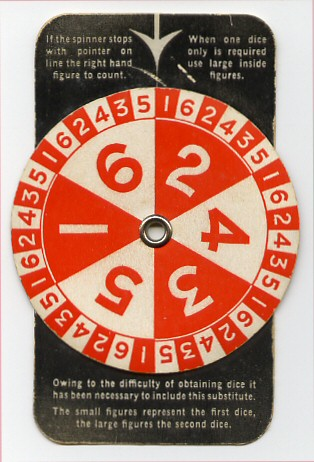
A numbered spinner puts more possible results around a circle. Flick the pointer, watch it turn, and wait for the result. It offers a shared moment of anticipation and can cover a wider range than one standard die.
Some spinners take a long time to settle. Then the pointer can stop between two numbers: one player reads the number on the left, another reads the one on the right. Do you spin again or choose a side? The next turn ends up waiting for an argument to be resolved.
Lucky Step: choose the range and read a clear result
Lucky Step brings that draw to iPhone and iPad. Set start and end values within 1–100, tap, and read one clearly displayed integer. There is no physical pointer to interpret. You can also set the reveal duration from 1 to 15 seconds; choose one second when you want to get straight to the next move.
What can you do with Lucky Step?
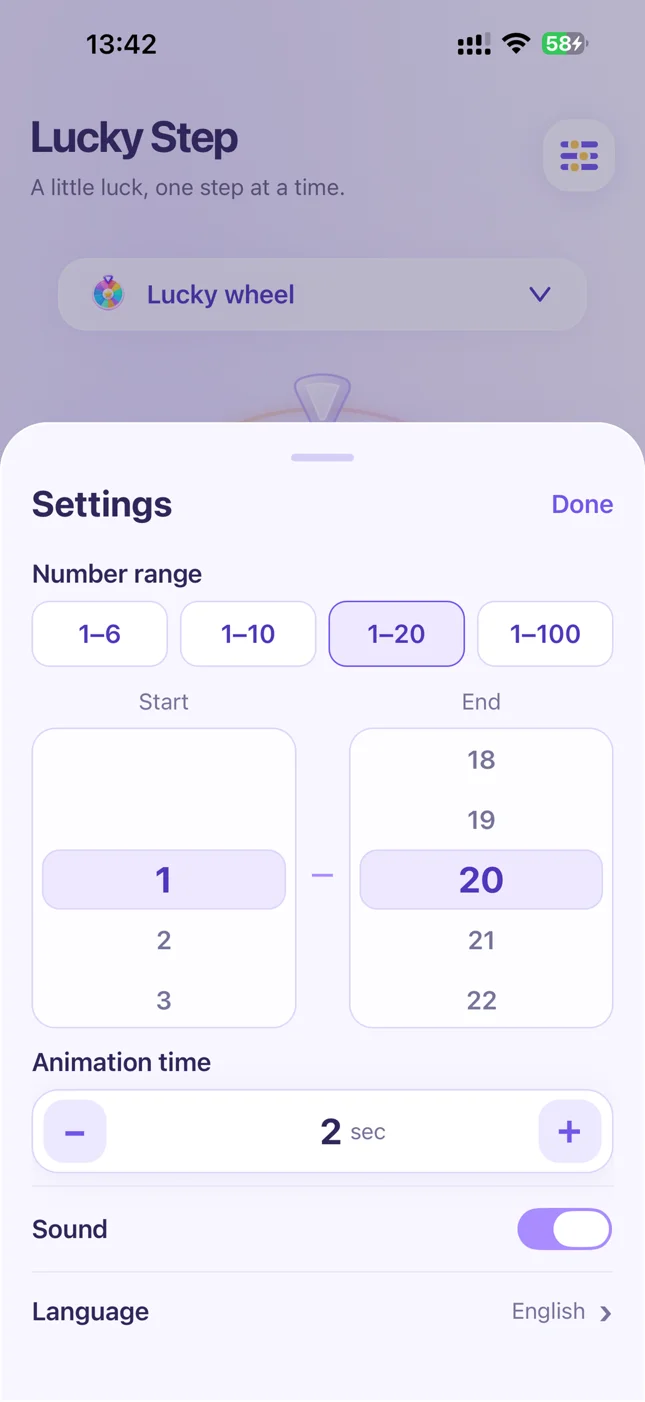
- Choose your number range: use quick ranges of 1–6, 1–10, 1–20, or 1–100, or set custom start and end values within 1–100 to match your movement rules.
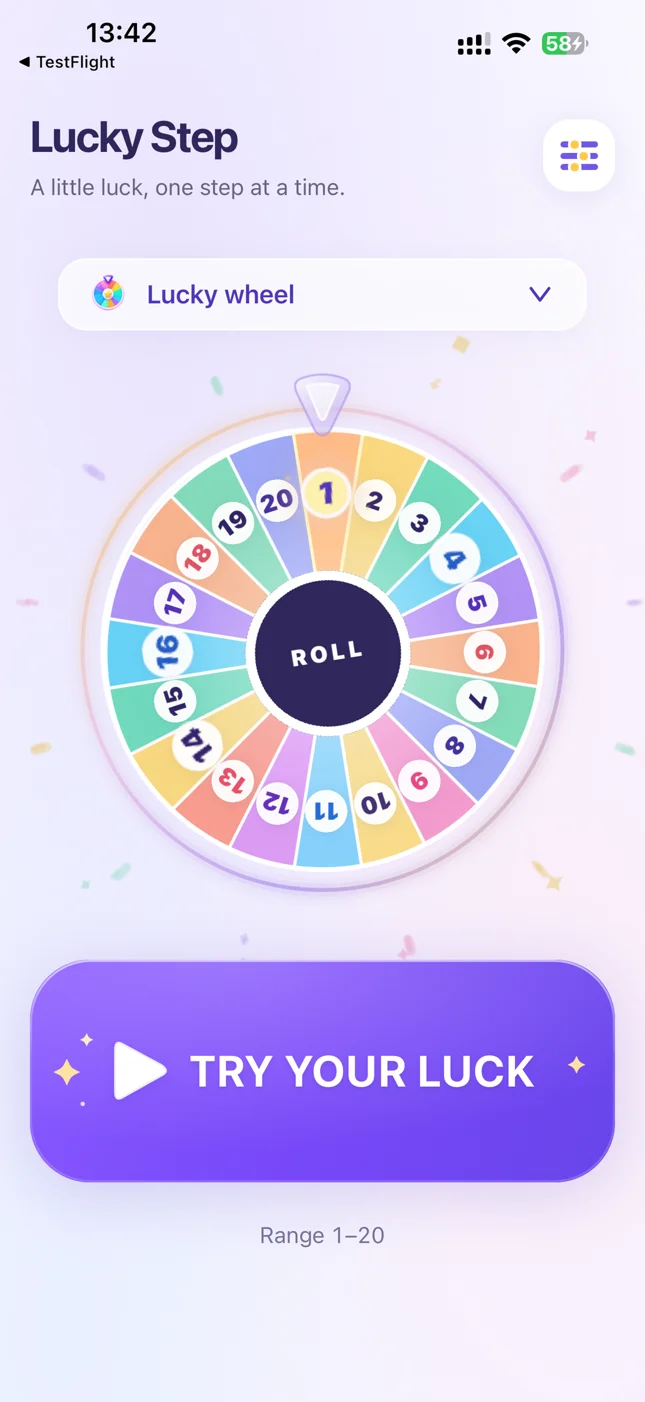
- Pick a reveal animation: choose rolling numbers, a lucky wheel, or a card flip, with a reveal duration of 1–15 seconds. The wheel supports ranges containing up to 20 numbers.
- Use multiple languages and spoken results: the app supports 10 languages, including English, Chinese, Japanese, Korean, and French. Follow your device language or choose one manually. With sound enabled, the result is spoken aloud after the animation.
- Choose a range such as 1–6, 1–10, 1–20, or your own 2–8 rule.
- Pick rolling numbers, a lucky wheel, or a card reveal. The wheel supports ranges containing up to 20 numbers; rolling numbers and cards handle larger ranges.
- Tap to draw, read the result, and move according to your game rules.
Lucky Step is free to download, requires no account, and generates numbers offline. Version 1.1 adds iPad support, so you can put a larger shared screen beside the board.
Keep two separate draws when the rules require two dice
If your game's rules call for the sum of two dice, draw two separate 1–6 results and add them. Keep both results if doubles trigger a special rule. A single draw from 2–12 has a different probability distribution from the sum of two dice, so they are not interchangeable.
For a homemade rule where each movement value should be equally likely, choose the range you have agreed on. Set the rule first, then start the next turn.